
This article has been a long time in the making.
Over the past two years I have travelled more than in the rest of my life combined. Scott and I hit 12 new countries and several states in the past 2 years and, by the end of it all, mastered our own travel groove. Our tested and approved method is to move as fast-paced and cheap as possible, eat really well, fully immerse ourselves in culture and history, and challenge ourselves to document the experience as fully and authentically as possible.
This last point means that not only have I travelled quite a bit, but I have taken and edited more photos than I thought possible. My inner Photoshop guru loves editing (almost more than the photo-taking itself!) It’s become a new hobby of mine to test my Photoshop limits and grow my knowledge of the Adobe program.
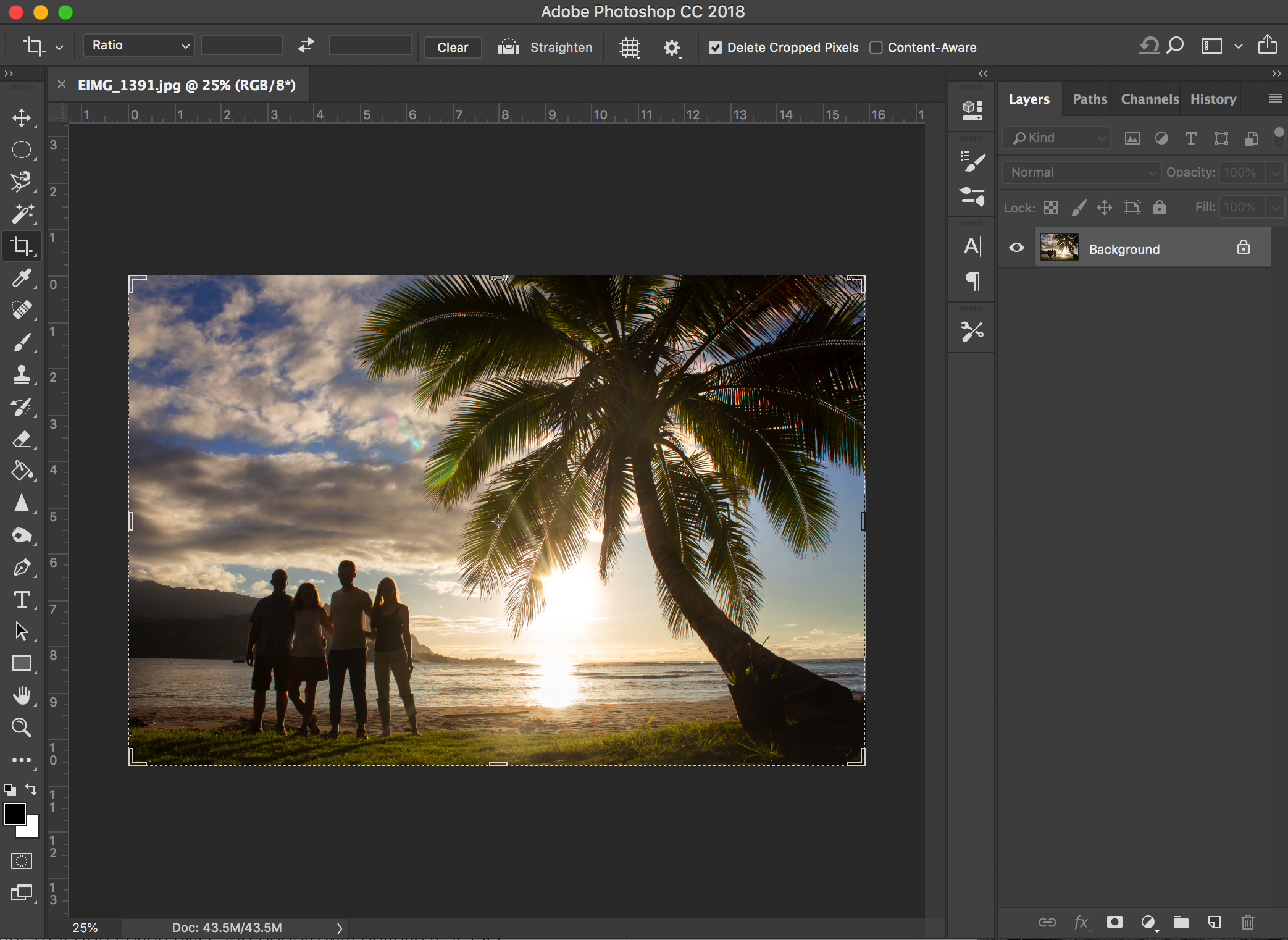
I quickly realized that having “photoshopping” on my list of hobbies can have it’s ethical dangers, especially when one of our goals is to make sure we are being authentic in our communication and documentation. Photoshop by nature is altering, tweaking, and manipulating the original source. This posed the question…
…how can I manipulate an image without jeopardizing it’s genuineness?
I could feel myself starting to be tempted by my own skills; Nobody would know if I added this or took out that. It won’t hurt anyone to change this just a bit. I would look better if I changed this…( oof that last one is a very dangerous road to take my friends).
This touches on a problem as old as technology. Advertising companies have been using editing to control our perceptions of people and products for years. Instagram users and photographers alike will do whatever it takes to achieve there picture perfect status. Tech-savvy creators will produce photos of things that don’t even exist and people will believe it as fact, because they simply do not understand the limits and powers of editing.
Knowing that I had the potential to walk down the same path as the advertisers and the fakes, I created a simple guideline to photoshop ethics; questions and steps I could use to cross check that my photo fit within my own ethical standards. I hope you find these as useful as I have.
- Always save a separate file and check the before and after.
An easy step to take before clicking save. Compare the original image next to the final edit. Check to make sure the new changes don’t endanger the integrity of the original. Whenever I edit an image, I save three versions. The original, the edited version, and one sized for social media. By keeping the original, I can always go back and cross check with what I started with. The edit will preserve what you saw and the original will preserve what the camera saw, a well -rounded memory.
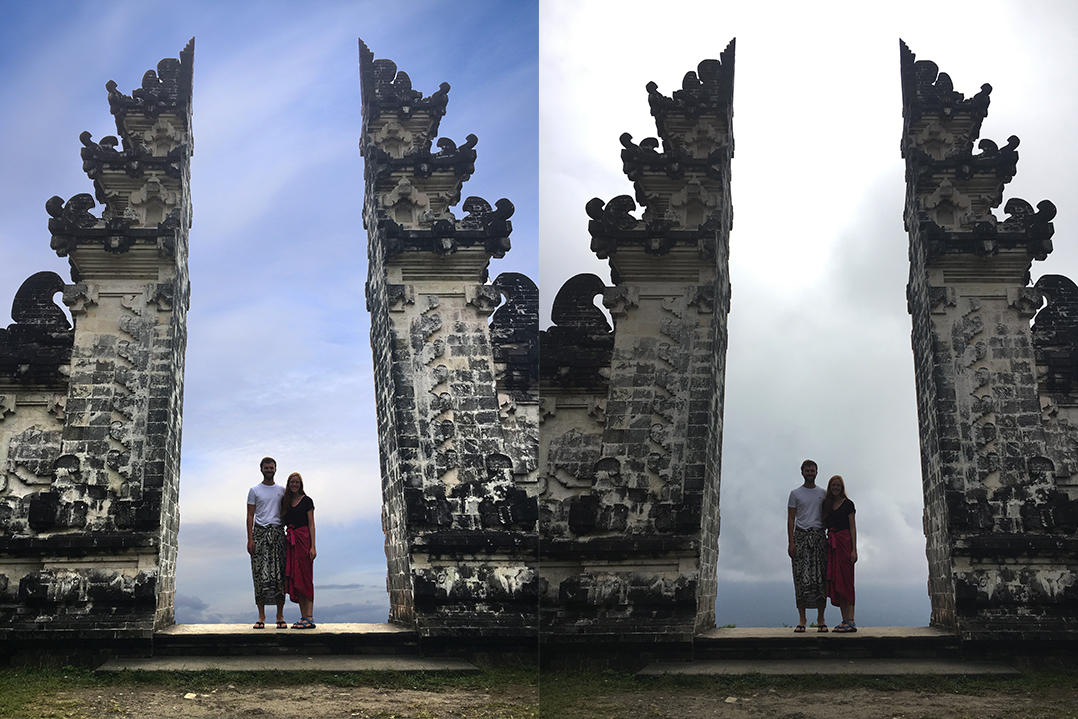
2. Could you have taken the image with different settings, framing, or conditions?
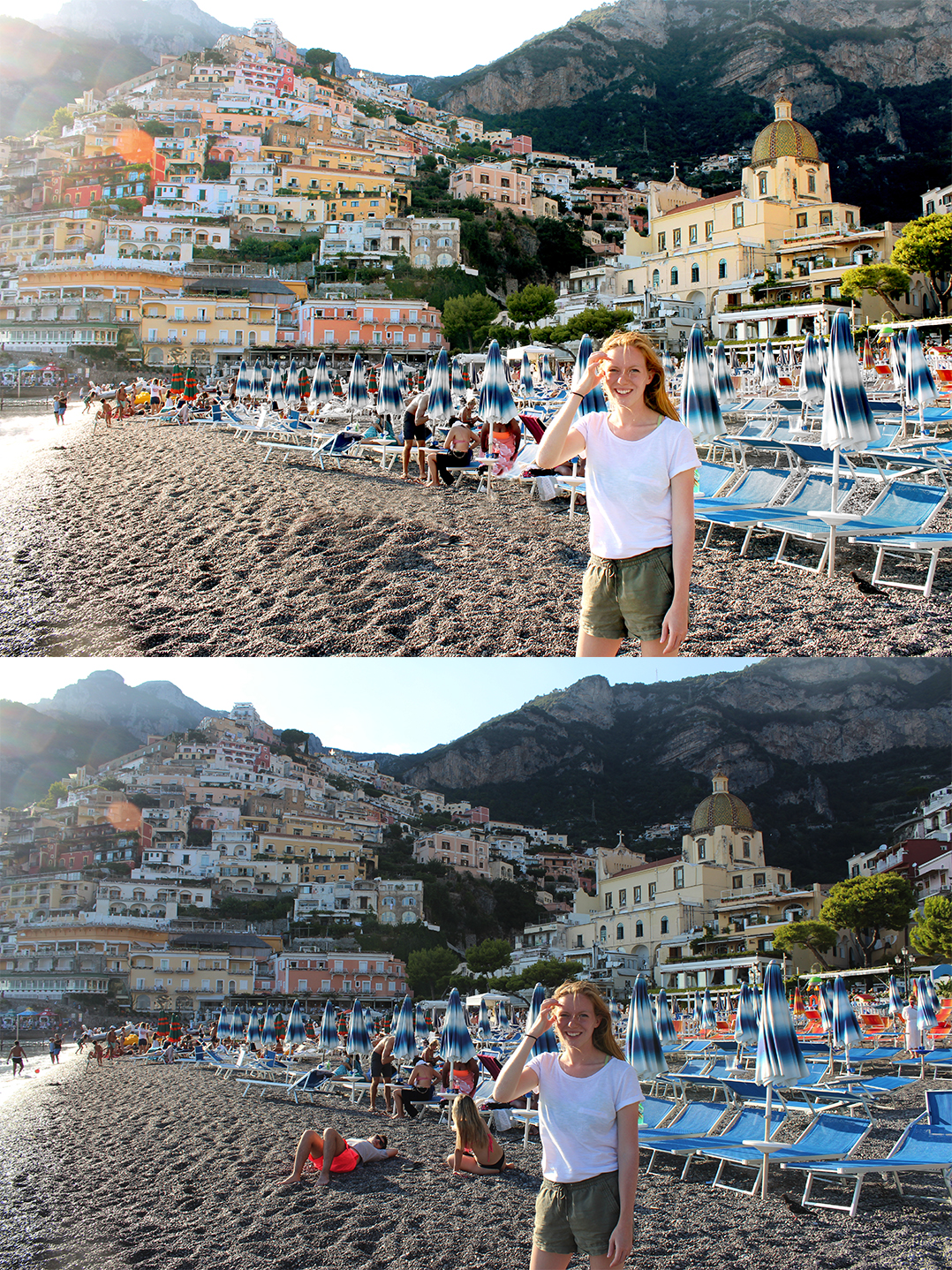
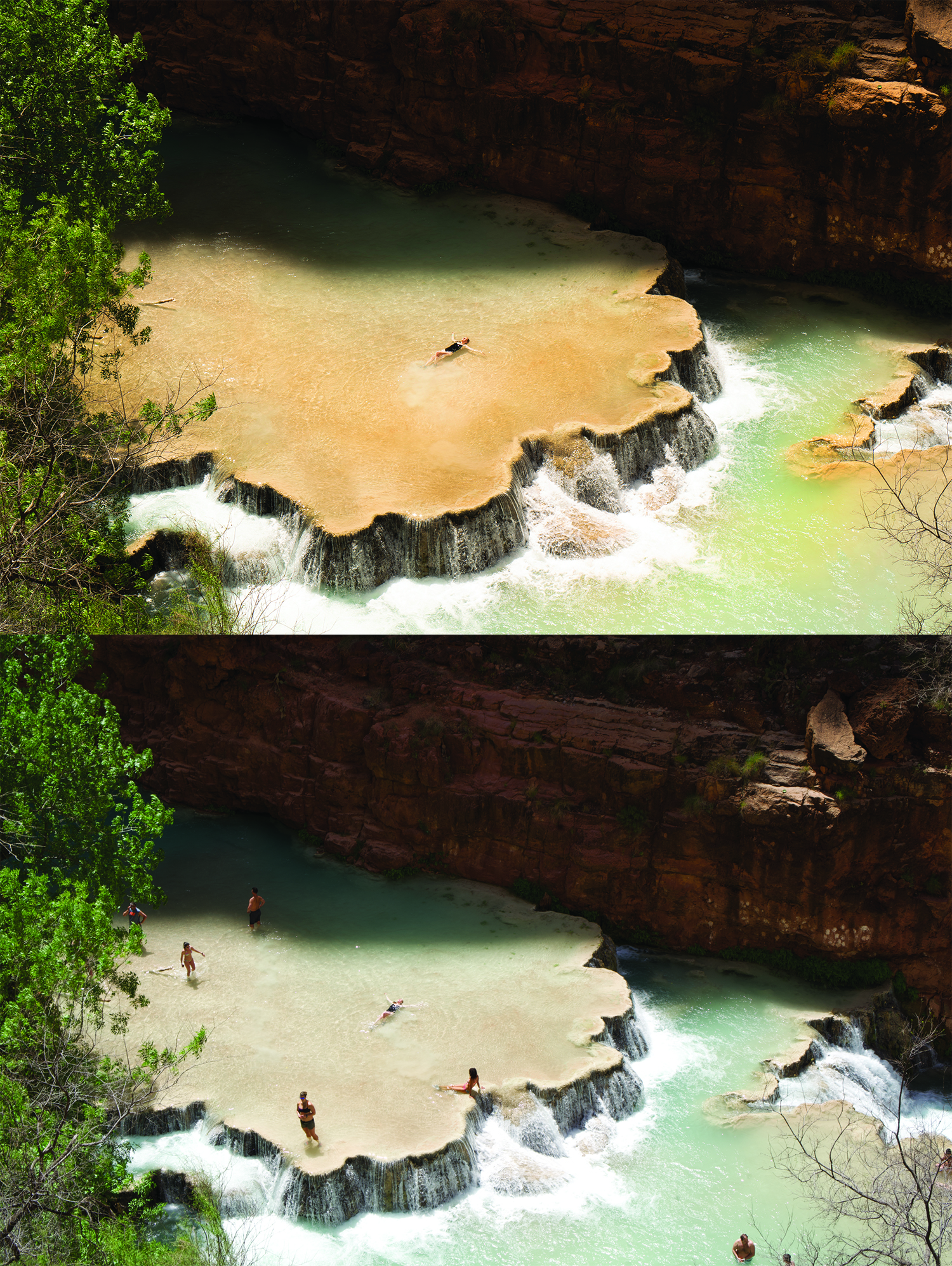
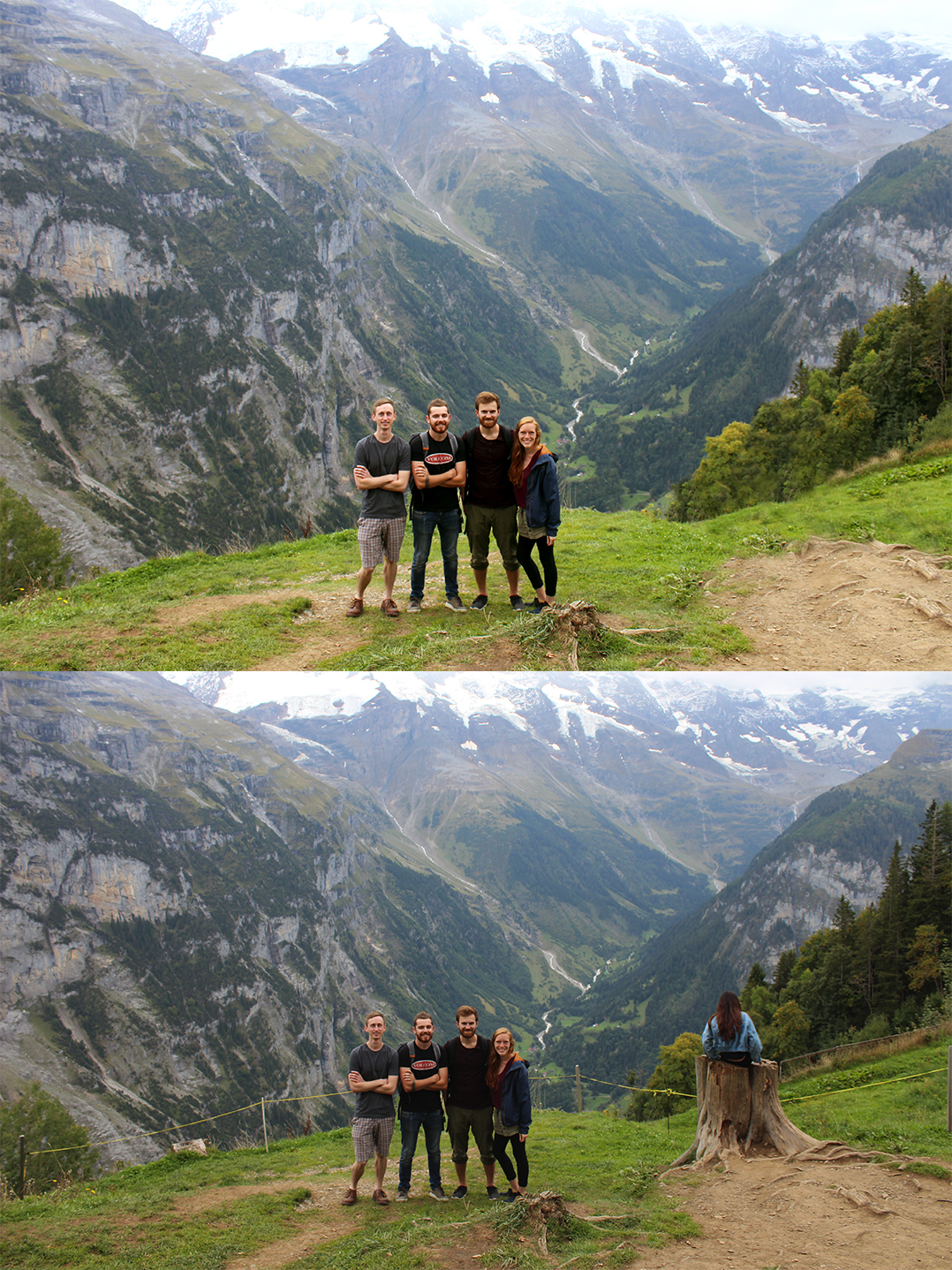
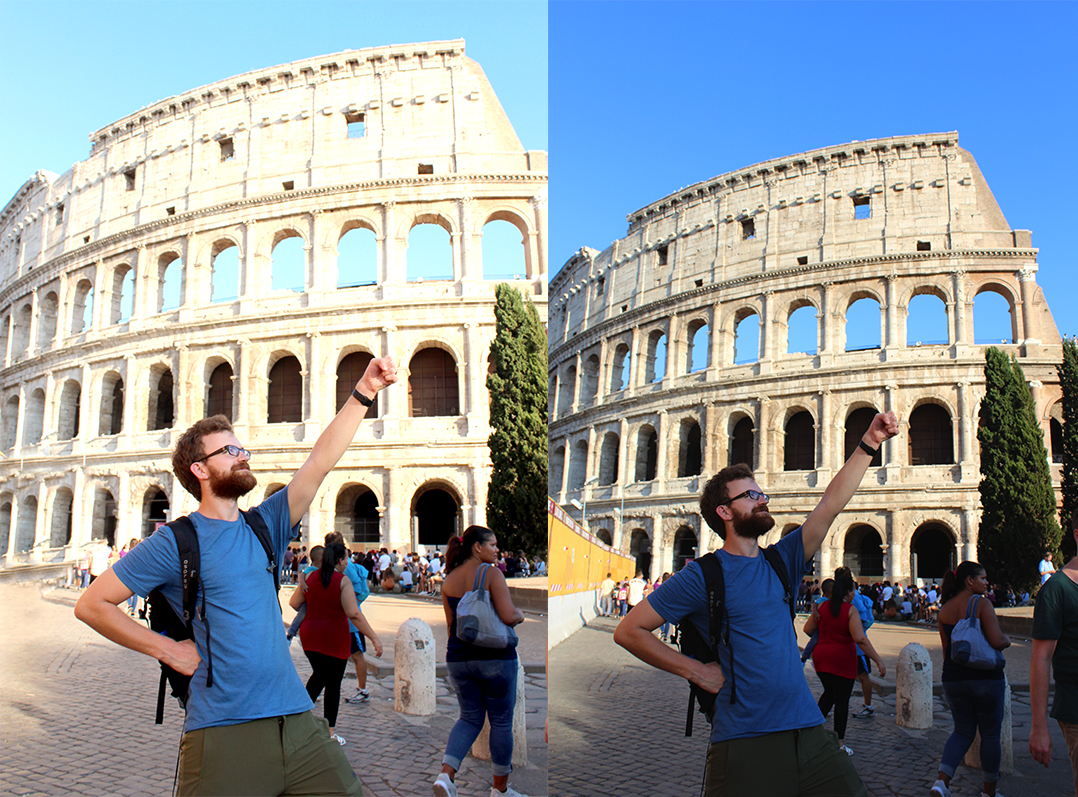
If the answer is yes, it is (most often) ethically ok to change. I often will snap a photo of a passing moment, only to come to realize that my camera settings are wrong, or someone walked into my shot, or I didn’t realize an ugly garbage can was in the background. Another common scenario is waiting for a scene to clear of people. The key to good travel photos in crowded places is good timing, but if your limited on time and your lighting conditions are changing, I find it perfectly fine to adjust a photo afterwards to match how you originally envisioned it, even if that means taking out a few people. If I could have made a small change in the moment to get a better shot, I will make that change in post, and strive to remember that change next time when I am out shooting.
The caveat to taking people out of a picture, is that it can imply that a busy location is in fact, not busy. This can be very dangerous and actually has very real and negative effects for heavy tourism locations and natural landmarks. It is important not to change how you experienced something, especially if your experience was overcrowded. There is an excellent article about how we can do this better and have a positive influence. I will link it Here.
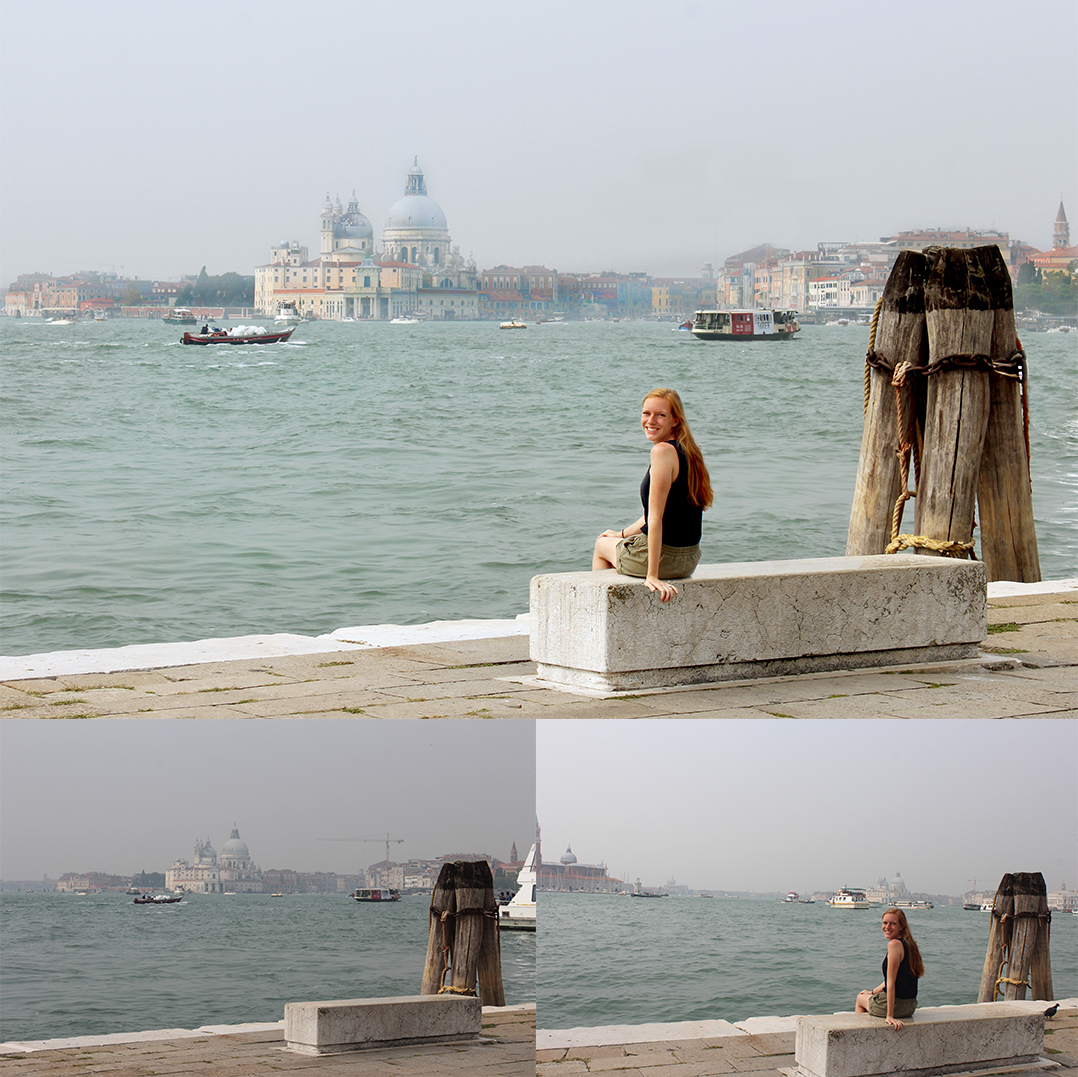
3. Does this image alter the size/color perception of certain objects?
Don’t make the water bluer than how you saw it with your eyes, don’t make your eyes bigger and your hips smaller than they are, and don’t make the beautiful purple flowers turn orange. Authenticity is the most attractive to our eyes. We can sniff out fake tans and untrue colors from a mile away. Avoid changes that alter the true size and color of an object.
5. Did this moment your showing actually happen?
Easy. If you were actually sipping mai-tais in a pool filled with flowers and dolphins, than go ahead and add a flower here and there and brighten the water to see the dolphins better. But never add in items that were not there to begin with and don’t put yourself in a situation you didn’t experience first hand.
6. What are your intentions for these changes?
Most importantly, always have your goal be to best communicate how you felt, what you saw, and what you did. Anything beyond that leans towards being manipulative. Don’t change a photo to try to look more impressive. Don’t beef up your highlight reel with moments that didn’t happen. Don’t try to change peoples perception of yourself using images.

Do strive to make your photographs the best you can. Do try to capture exactly what it felt like to experience what you did. Do take advantage of editing tools to help your photograph make an impression. Do fix small mistakes you made on the field and work towards not making them again. Do have fun with photoshop because its an incredible potential filled tool! Sometimes a few small edits can actually make a photo look more lifelike and true than without.
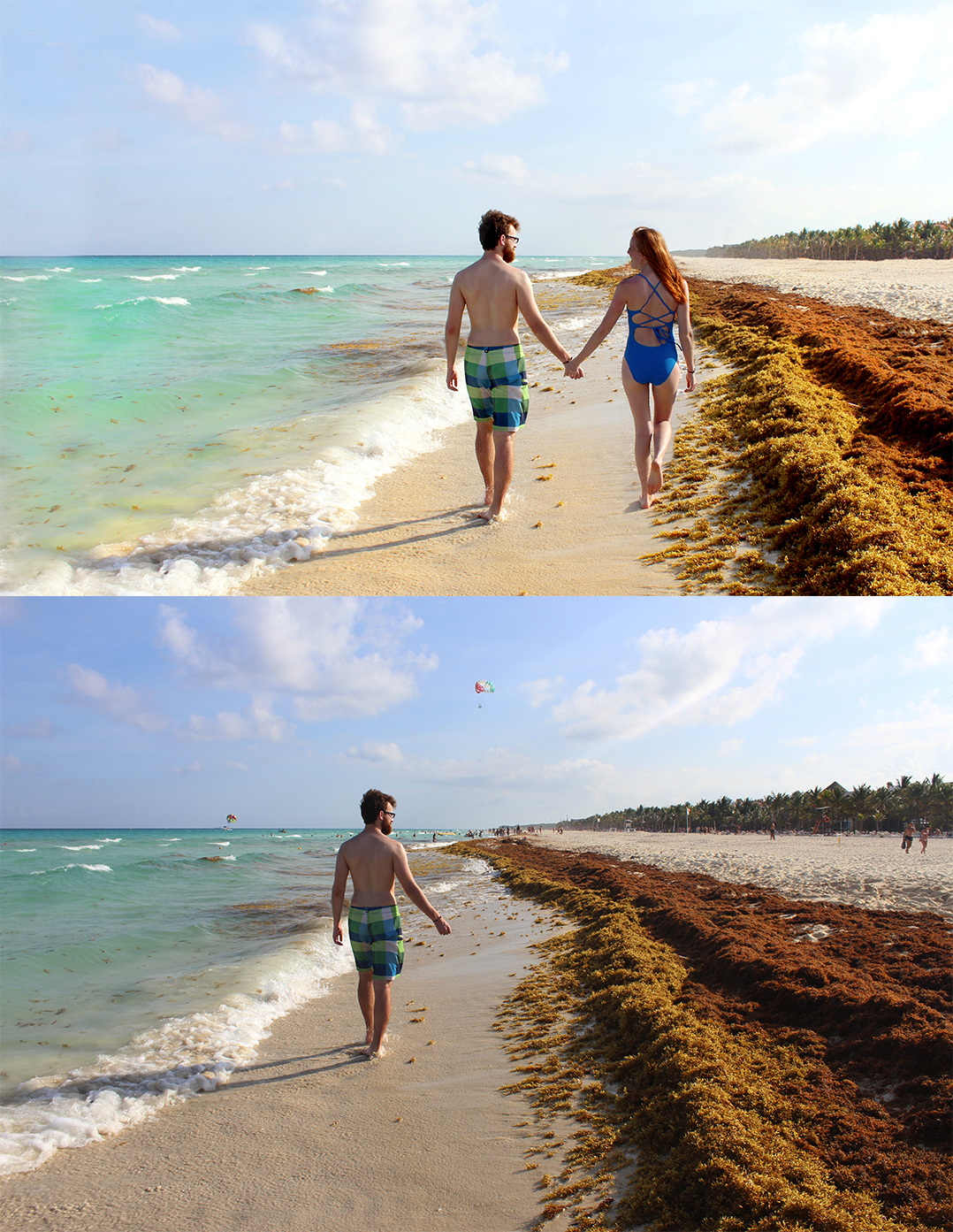
… And at the end of the day, if your still second guessing whether or not the changes you made are ethical, simply put a disclaimer in the caption of your photo of the edits your made. People love authenticity; there’s no shame in admitting that you used photoshop to bring your artistic vision to life.
I hope this was useful to you! Happy editing!
 Global Pastiche